
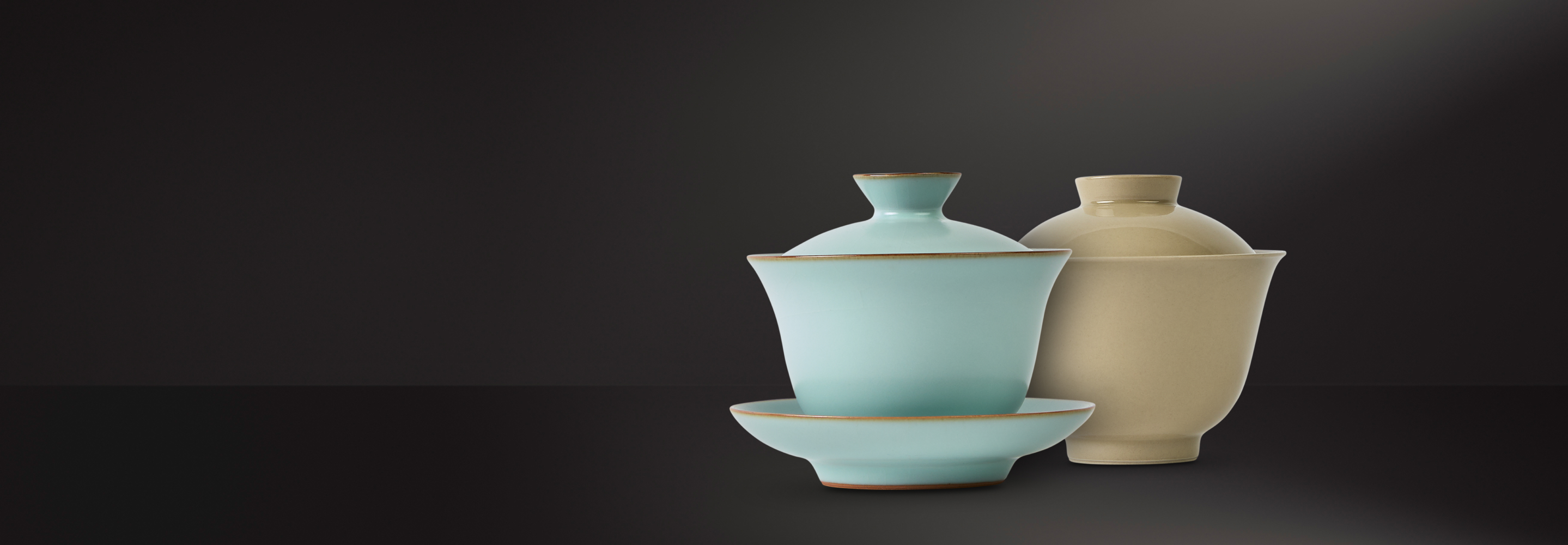
For centuries, the Gaiwan has been at the heart of Chinese tea culture.
Meaning “lidded bowl”, this deceptively simple vessel has stood the test of time for its beauty, versatility, and quiet power. First popularised during the Ming dynasty, it consists of three elegant parts, bowl, lid, and saucer, that work together to create an extraordinary brewing experience.
Equally at home in traditional Gongfu ceremonies and modern tasting rooms, the Gaiwan remains one of the most beloved and effective ways to brew tea.
What is a Gaiwan?
A Gaiwan is made of three parts:
- The lid (tiān) represents the heavens.
- The bowl (rén) represents humanity.
- The saucer (dì) symbolises the earth.
When held together in your hands, you're holding a small harmony of heaven, human, and earth, a quiet reflection of Daoist philosophy.
The Gaiwan's open shape and smooth surface allow for direct observation of the leaves, the way they swirl, unfurl, and release aroma. The typical size is 100-200ml, perfect for multiple short infusions.
Handling a Gaiwan is part of the ritual: using your thumb and middle finger to steady the base while the index finger gently presses the lid. With practice, this method feels natural, offering precision and grace in every pour.
The history of the Gaiwan
The Gaiwan emerged during the Ming dynasty (1368-1644), at a time when powdered tea gave way to loose-leaf brewing. Its design was a perfect response to this shift, allowing the beauty of whole leaves to be seen, steeped, and savoured.
From imperial palaces to scholar's desks and humble teahouses, the gaiwan became a vessel of choice, prized for its function, but also its symbolism. In Chinese tea tradition, brewing with a gaiwan is not only a method; it's a living metaphor for balance and presence. Today, it is still used in gongfu tea ceremonies and by professional tea tasters around the world.
The making of the Gaiwan
Porcelain is the traditional choice, loved for its smooth surface and neutral influence on flavour. White porcelain, in particular, is favoured for tea judging, as it reveals the true colour and clarity of the liquor.
Glass versions invite visual appreciation, watching leaves dance in water adds a theatrical element. Clay Gaiwans are less common but bring their own warmth and story, slightly shifting flavour depending on the material's mineral content.
Many Gaiwans are also adorned with elegant calligraphy or hand-painted motifs, floral, mountain, and poetic scenes that reflect the depth of Chinese culture.
Which teas belong in a Gaiwan?
A Gaiwan is extraordinarily versatile and can be used to brew almost any tea. However, it is most commonly associated with Chinese green teas, White teas, Oolongs, and Pu-erh.
Because it does not retain flavour like porous clay teapots, a porcelain or glass Gaiwan can be used across multiple tea types without cross-influence.
This makes it a favourite tool for tea tasters and those who enjoy a wide variety of teas.
How to brew with a Gaiwan
-
1
Preheat the Gaiwan with hot water, then discard.
-
2
Add 5-6g of tea (for a 100-120ml Gaiwan).
-
3
Rinse the leaves quickly with hot water and discard (awakens the tea).
-
4
Infuse with water at the recommended temperature for the tea type.
-
5
Steep for 10-20 seconds initially, then increase slightly with each infusion.
-
6
Pour into fairness pitcher or directly into cups, using the lid to hold back the leaves.


