
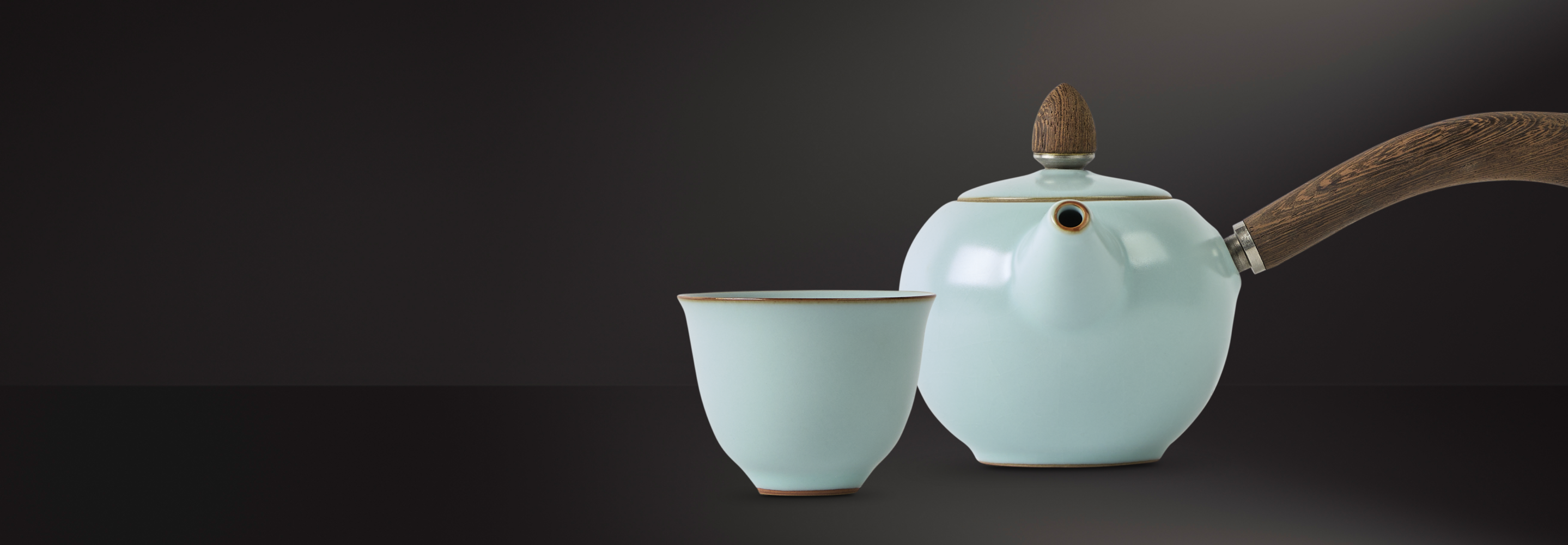
Once reserved for emperors, noblemen, and samurai, Japanese green tea has long since become a daily ritual in households across Japan.
At the heart of this ritual sits the Kyusu teapot, an iconic vessel designed for brewing green teas such as Sencha, Gen Mai Cha, and Gyokuro.
Today, it remains an enduring symbol of Japanese tea culture.
What is a Kyusu?
A Kyusu is a traditional Japanese teapot, most often crafted from clay and recognised by its distinctive side handle set at a right angle to the spout. While in Japan kyusu can refer to all teapots, in the West the name is used almost exclusively for this side-handled style.
Smaller than the average Western teapot, a Kyusu typically holds between 100-300ml, though larger ones exist for serving guests. The design is celebrated not only for its beauty but also for its ergonomics, easy to pour and gentle on the wrist.
Though clay is most traditional, potters also craft Kyusu in porcelain and glass. Porcelain varieties are especially valued for tea tastings, as they reveal the true liquor and aroma without influence.
A hallmark of authentic Kyusu craftsmanship lies in the lid, which is fired together with the body to ensure a perfect fit, though it means replacements are nearly impossible if broken. Inside, a fine mesh strainer, often built-in, allows for direct brewing of delicate green teas while preventing over-steeping when the last drop is poured.
The history of the Kyusu
The origins of the Kyusu trace back to Song-dynasty China (960–1279), where the side-handled teapot was first developed before being introduced to Japan. Over time, it evolved into a uniquely Japanese form. Its widespread use grew alongside the popularity of Sencha in the 18th century. Until then, Matcha dominated tea culture, but the rise of Sencha drinking in homes called for a new vessel suited to leaf infusion. The monk-poet Baisao, known as the “old tea seller”, was central to this shift. Leaving temple life, he sold Sencha in Kyoto and championed it as an everyday tea. He is remembered as the first master of Senchadō, the “Way of Sencha.” Today, the Kyusu remains a fixture in most Japanese households, used for brewing green tea after meals or throughout the day.
The making of the Kyusu
Much like the famed Yixing teapots of China, many Kyusu are left unglazed or finished only with a whisper-thin coat of clear glaze. The clay itself therefore plays a vital role. Potters favour clays rich in iron, zinc, copper, or manganese, minerals that gently interact with the liquor, softening bitterness and highlighting sweetness.
Tea connoisseurs often recognise the character imparted by clays from different regions and choose their Kyusu accordingly. The clay also enhances the aroma during brewing, giving each cup depth and nuance.
Handmade Kyusu remain revered works of pottery, and their artisans are held in deep respect throughout Japan.
Which teas belong in a Kyusu?
While most associated with Sencha, the Kyusu is equally suited to brewing other Japanese green teas such as Gen Mai Cha and Gyokuro. However, because clay is porous and absorbs oils and aromas, many enthusiasts dedicate a Kyusu to a single type of tea.
This makes it a favourite tool for tea tasters and those who enjoy a wide variety of teas.
How to brew with the Kyusu
For Sencha, follow this guide:
-
1
Measure 0.5g of leaves per 30ml of water and place directly into the Kyusu.
-
2
Heat water to 80℃ / 175℉.
-
3
Steep for 1 minute on the first infusion.
-
4
Always decant every last drop to prevent over-brewing.
-
5
Steep for 30 seconds on the second infusion.
-
6
Add 15 seconds to each subsequent infusion (Japanese green teas typically yield 3-5 brews).


